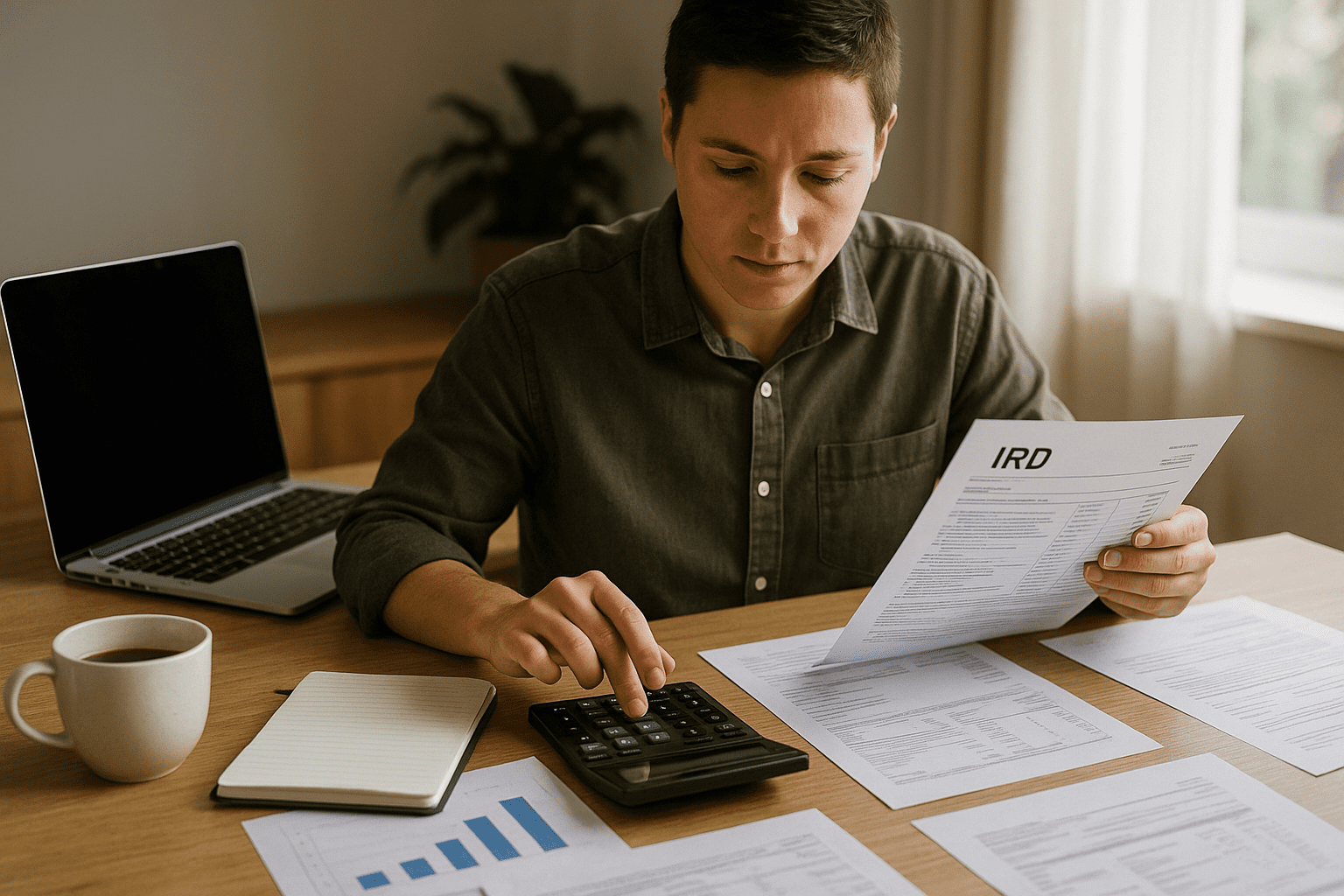
TL;DR: Small business tax in NZ depends on the structure, taxable profit and activities of the business. Sole traders generally use individual income tax rates, while most companies pay 28% on taxable profit. GST, employment obligations and payment timing are separate parts of the picture.
- Income tax is generally assessed on taxable profit rather than turnover.
- GST registration uses its own rules and thresholds.
- Tax estimates need a cash plan and the appropriate advice.
A small business does not have one special tax rate that answers every question. The structure matters, and so does the difference between sales, profit and money withdrawn by the owner.
A practical tax system makes the obligations visible throughout the year. That means suitable records, a calendar of required returns and a cash provision that is reviewed when performance changes. The aim is to avoid treating the year-end calculation as the first time tax needs attention.
How does business structure affect income tax?
A sole trader's taxable business result is included in their individual position. Most companies use the company rate, with payments to owners requiring separate consideration. The rate alone does not establish the total result for an owner.
Your accountant should confirm the treatment for the actual structure, including any special arrangements. A useful management report can help estimate the result, but the tax calculation may require adjustments. The books and tax estimate need to be connected without assuming they are identical.
Key point: The structure and taxable calculation determine the income tax treatment.
When does GST need attention?
Inland Revenue requires GST registration where taxable turnover was at least $60,000 in the last twelve months or is expected to reach that amount in the next twelve months. Charging GST on taxable supplies can also trigger registration. The current official rules should be checked for the activity.
GST is separate from income tax. A business below the registration threshold may still have taxable profit, while a registered business needs to account for GST according to its arrangements. The bank balance should not be treated as wholly available for owner spending.
Key point: GST registration is a separate question from whether income tax is payable.
What is provisional tax for?
Provisional tax is a way of paying income tax during the year rather than only after it ends. Inland Revenue's general rule refers to residual income tax of more than $5,000 from the previous return, with specific rules and exceptions to consider.
The appropriate method and due dates need checking with your accountant. The first year of business is not automatically tax-free. A forward cash plan helps avoid committing money that will be needed when the payment falls due.
Key point: Payment timing needs planning even before the final tax calculation is complete.
What process makes tax easier to manage?
Regular reconciliation, clear expense records and separation of private transactions can reduce uncertainty. Staff-related taxes and reporting need their own process where applicable. Your calendar should identify who is responsible for each return and payment.
A review is useful when profit changes, a major purchase is planned or owner payments change. That gives the adviser time to explain the implications before a decision is made. A simple process followed consistently is better than a complicated system nobody keeps current.
Key point: Reliable records and timely advice make the tax position easier to plan for.
What should your regular tax review cover?
A short review can connect the records, estimated result and payment plan. The detail can be handled by your accountant, but you should know which obligations are approaching and which changes need a discussion. That makes tax part of normal management.
- Records are reconciled and unusual items explained.
- The estimated taxable result is reviewed.
- Returns and payments have a responsible person and due date.
- The cash provision reflects material changes in performance.
Key point: The purpose is to make future obligations visible while you still have time to plan.
Which official sources can you check?
The following official resources were checked on 30 October 2026. They provide the detail behind the relevant rules, definitions or planning tools.
- Inland Revenue: business income tax rates
- Inland Revenue: registering for GST
- Inland Revenue: provisional tax
Key point: The current official guidance is the reference for a rule or requirement; your own circumstances may need an adviser’s assessment.
Frequently asked questions
Is small business income tax based on sales?
Generally it is based on taxable profit after the relevant expenses and adjustments. Turnover and taxable profit are different amounts.
Is GST the same as income tax?
No. GST and income tax have different purposes, calculations and reporting arrangements.
Is my first year in business tax-free?
No. Tax can still be payable even if the payment falls due later. An estimate and cash provision should be considered early.
Can this article determine the tax treatment for my situation?
No. This is general information, with links to official guidance checked on 30 October 2026. Your accountant or tax adviser should assess the facts, current rules and any exceptions before you act.
How can I enquire about business coaching?
The Book a Conversation button takes you to the enquiry section. A little information about your business and the issue you want help with lets us suggest an independent coach we think could be a good fit. That coach may work with you remotely rather than be based in your area.
Key point: The next step should suit the question, whether that is a practical business review or advice from a specialist.
Related reading
- Lowest Income Tax Rate NZ: The Current Brackets Explained
- Pay Yourself From a Business in NZ: Salary, Drawings and Tax Questions
What to take away from this
Reliable records and timely advice make the tax position easier to plan for. The purpose is to make future obligations visible while you still have time to plan.
Where does coaching fit alongside tax advice?
Your accountant or tax adviser should confirm the treatment for your circumstances. Coaching can help you organise the surrounding business work, such as record-keeping responsibilities, cash planning and following through on the decisions you have agreed.
Our collective of independent business coaches works with small business owners remotely as well as across New Zealand. The Book a Conversation enquiry form lets you tell us what you need. We can suggest someone we think will be a good fit, which may be a coach outside your area.